
Mayor announces £90 million towards new green bonds to accelerate the push to net-zero with record investment

The Mayor of London, Sadiq Khan, today outlined bold proposals to secure more than £500 million for investing in climate action by issuing green bonds. Sadiq would become the first Mayor of London to issue green bonds in this way and at this level – raising funds for new and existing projects which deliver environmental benefits, and a more sustainable economy.

Sadiq’s plans will accelerate London’s push to net-zero by helping to tackle rising energy bills and the climate emergency. The Mayor is committing a record £90 million of GLA funds to support the ambition, with £4 million to develop high-impact green investment opportunities for the public and private sector; and £86 million to support a substantial GLA Green Bond programme, financing direct decarbonisation investment by the GLA Group and its strategic partners as part of the Mayor’s Green Financing Facility.

This investment will support projects making social housing and public buildings energy efficient, as well as clean, local energy projects providing solar PV, heat pumps and district heating across London. By leading the way and committing an initial £90 million the Mayor will help unlock over £500 million to finance such low-carbon projects.

Improvements to social housing will help tackle inequalities exposed and exacerbated by the pandemic and the cost of living crisis. London has some of the highest levels of fuel poverty in the country with one in nine* London households unable to meet the cost of heating their homes. Low-carbon heat projects help reduce energy bills and improve living conditions for thousands of Londoners. They will also support Londoners with the skills they need for jobs in the green economy, rebuilding the capital post-COVID so that it’s cleaner, greener and fairer.

The Mayor’s proposals are estimated to support more than one million tonnes of carbon savings over the lifetime of the projects and lower energy use by 328,638 MWh a year, the equivalent to the energy used by nearly 85,000 homes in a year, while supporting jobs in London.

London continues to be a world leader in green finance, this new funding builds on the £30 million he committed to the Mayor’s Energy Efficiency Fund at COP26 in Glasgow which is expected to leverage up to £150 million of investment into London projects. This latest announcement shows a clear acceleration of efforts to achieve his net-zero ambitions, building on his Net Zero pathway report launched in January.

The Mayor has announced this record new funding ahead of publishing his final Budget for the Greater London Authority (GLA) Group for 2022-23 on Wednesday. The final Budget takes into account that council tax and business rates returns from local authorities are higher than were forecast in the Mayor’s consultation Budget proposals last year. 
Absolutely shocking from the Conservative Party Group at the London Assembly

At the London Assembly Plenary meeting last week, the Conservative Group rejected Labour motions condemning the Cost of Living crisis and failed to support our calls to implement the Living Wage Foundation’s recommended wage level, stop the National Insurance tax rise, provide universal free school meals and stop the cuts to Universal Credit.

Even more bizarrely, they justified low and middle income earners being unfairly impacted by the Government’s policies by saying the wealthy are paying more tax than ever before.

If taxes are to rise is it right to have those with the most means protected and make the lowest paid suffer?

Mayoral statement on Met Commissioner

The Mayor of London, Sadiq Khan, said: “Last week, I made clear to the Metropolitan Police Commissioner the scale of the change I believe is urgently required to rebuild the trust and confidence of Londoners in the Met and to root out the racism, sexism, homophobia, bullying, discrimination and misogyny that still exists.

“I am not satisfied with the Commissioner’s response.

“On being informed of this, Dame Cressida Dick has said she will be standing aside. It’s clear that the only way to start to deliver the scale of the change required is to have new leadership right at the top of the Metropolitan Police.

“I would like to thank Dame Cressida Dick for her 40 years of dedicated public service, with the vast majority spent at the Met where she was the first woman to become Commissioner. In particular, I commend her for the recent work in helping us to bring down violent crime in London – although of course there is more to do.

“I want to put on the record again that there are thousands of incredibly brave and decent police officers at the Met who go above and beyond every day to help keep us safe, and we owe them a huge debt of gratitude.

“I will now work closely with the Home Secretary on the appointment of a new Commissioner so that we can move quickly to restore trust in the capital’s police service while keeping London safe.” 

New green, productivity boosting buses introduced – but no more will be delivered until a long-term funding deal is secured

The new ultra-modern buses were first developed around two years ago, and are a sign of what the future of buses could be if the Government agrees a long term funding deal with Transport for London (TfL).

Without a deal, the less green and increasingly ageing bus fleet will have to remain on the roads. TfL is introducing new buses to the north-south route 63 that have a range of innovative features aimed at making them an even more attractive, green alternative to the car. In development over the last couple of years, the first buses came into service in December, with the whole route transformed in the coming weeks. It comes as ridership between on the route, between King’s Cross and Honor Oak, has returned to close to pre-pandemic levels.

The new route 63 buses were manufactured by ADL, the country’s largest bus and coach manufacturer, in Scarborough. ADL employs 2,000 people in skilled jobs, as well as supporting a successful apprenticeship scheme.

Other London buses are produced around the UK in places such as Ballymena and Falkirk, demonstrating how investment in the capital’s transport network helps level up the whole country.

Every young Londoner in need of support will get access to a personal mentor by 2024

The Mayor of London, Sadiq Khan, and Chair of London Councils, Georgia Gould, have today announced that every young Londoner in need of support will have access to a personal mentor by 2024 – one of his key manifesto pledges. 

This will be delivered as part of a New Deal for Young People, with City Hall, London boroughs, community groups and others across the city working in partnership to put young Londoners at the heart of the recovery from the pandemic.

The commitment is to provide access to a dedicated mentor to young Londoners who are most in need of support and who face the biggest challenges to reaching their potential. This includes children who have been excluded from school or college, those who are impacted by exploitation, young Londoners who are impacted by domestic violence or living in poverty, and those involved in the care system.  Overall, there are roughly 100,000 young people in London who face these kinds of challenges.   

Sadiq is kickstarting the action by announcing £7.2 million of investment from City Hall. The new funding will expand the mentoring offer in the capital now, helping young Londoners most in need get the help and support they deserve to reach their potential. 

The new fund consists of £4.8 million for three programmes that will boost mentoring capacity and build on the incredible work already happening across London. It will expand mentoring for young people, including in science, technology, engineering, arts and maths, and support local organisations to provide training and work experience.

Alongside this, the Mayor has announced today that London’s Violence Reduction Unit, which he set up in 2019, will invest £2.4m in a three-year mentoring programme. The new investment will build on the VRU’s determination to tackle school exclusions by investing in effective mentoring programmes to keep pupils in Pupil Referral Units, engaged in their education, motivated and supported to achieve their goals.

Young Londoners have been disproportionately impacted by the COVID-19 pandemic with a third either losing their jobs or being furloughed, compared to one in six older adults.

Far too many young people are working in insecure jobs with many on temporary or zero-hour contracts. Many more have seen training, education and employment opportunities reduce significantly in the last 20 months, making the need for support more important than ever to prevent increasing numbers of young Londoners being left vulnerable to exploitation or getting sucked into gangs and violence.    

Throughout the pandemic, through City Hall, London Councils and London boroughs’ networks, young people and youth practitioners have championed the importance of a trusted personal relationship in transforming a young person’s life.

Research shows that young people will be adversely affected by the impact of COVID-19. The Resolution Foundation found that one-third of 18-24-year-old employees (excluding students) have lost jobs or been furloughed, compared to one-in-six older adults. Resolution Foundation: ‘Young workers in the coronavirus crisis’ 

Young people have been hit hard by Covid-19 and are a top priority for the Mayor, London Councils and the London Recovery Board. Young Londoners have told us about the transformational impact that mentors and role models can have on their lives.  

The New Deal for Young People has committed that by 2024 all young people most in need of support will be entitled to a personal mentor and all young Londoners have access to quality youth activities. 
 
Funding for the expansion of mentoring for young people was made available from three separate programmes1 with grants ranging from £50,000 to £500,000 for groups who deliver mentoring direct or support organisations which do.

Two separate grants worth a total of £300,000 will also be made to support local organisations to provide employability, training and work experience opportunities for young people.

  • Leaders Programme: 7-12 grants available of between £100,000 and £500,000 who are able to expand mentoring for young people and provide support to other organisations delivering mentoring;
  • Headstart Action programme: Two grants available of up to £150,000 to support local organisations to provide employability, training and work experience opportunities for young people
  • Science, Technology, Engineering, Arts and Maths (STEAM) Mentoring programme: 5-12 grants of between £50,000 and £100,000 to expand quality STEAM mentoring for young people and to support STEAM employers who want to expand or introduce mentoring programmes.

https://www.london.gov.uk/coronavirus/londons-recovery-coronavirus-crisis/recovery-context/new-deal-young-people/new-deal-young-people-funding

The VRU has listened to feedback from the education sector and invested £2.4m in a London PRU Mentoring programme for a three-year period. PRUs serve pupils who have been excluded from mainstream education; a cohort of children and young people who are disproportionately vulnerable. The VRU wants to reduce the likelihood of poor life outcomes associated with being excluded by investing in effective mentoring programmes to keep pupils in PRUs engaged in their education, motivated and supported to achieve their goals.

TfL Funding Update

Transport for London (TfL) today issued the following update on Government funding:

A Transport for London (TfL) spokesperson said: “We continue to discuss our funding requirements with the Government. There is no UK recovery from the pandemic without a London recovery and there is no London recovery without a properly funded transport network in the capital. It is essential London receives the sustained long-term Government funding that is vital for the coming years if a period of ‘managed decline’ of London’s transport network is to be avoided.

“We have today (4 February) agreed with the Government that our existing funding agreement will be extended until 18 February 2022 so that these discussions can be concluded. Working together, we must achieve a longer term capital funding settlement for at least three years, that ensures London’s transport network can remain reliable and efficient, can support the jobs and new homes that rely upon it and can support the economic recovery of the capital and the country as a whole. We hope these discussions can be concluded successfully soon. “

On 1 June 2021, TfL announced that an extraordinary funding and financing support package (the “Funding Package”) had been agreed between TfL and the DfT to support transport services in London and contribute towards TfL’s forecast revenue loss due to reduced passenger numbers using TfL services as a result of the pandemic. The Funding Package initially provided support for the period from 29 May 2021 to 11 December 2021 and was subsequently extended.

On 17 December 2021, TfL announced that the terms of the Funding Package had been amended to extend the funding period to 4 February 2022, to allow TfL to continue discussions with the government in relation to further financial support.

Following further discussion, the terms of the Funding Package have now been amended to define the funding period as 29 May 2021 to 18 February 2022. Other provisions of the Funding Package remain materially the same, including the Top Up Grant mechanism, pursuant to the terms of the Funding Package.

The original terms of the Funding Package announced on 1 June 2021 can be found in the funding letter.

Krupesh Hirani AM at the London Assembly Health Committee asking about hospitalisation and vaccines

It is incredibly important to take up all three doses of Covid vaccinations. Heard from Public Health Regional Director for London Professor Kevin Fenton at a recent Health Committee meeting at the London Assembly that 3 in 5 of those in London hospitals with Covid-19 are not vaccinated and 80% have not taken all three doses.

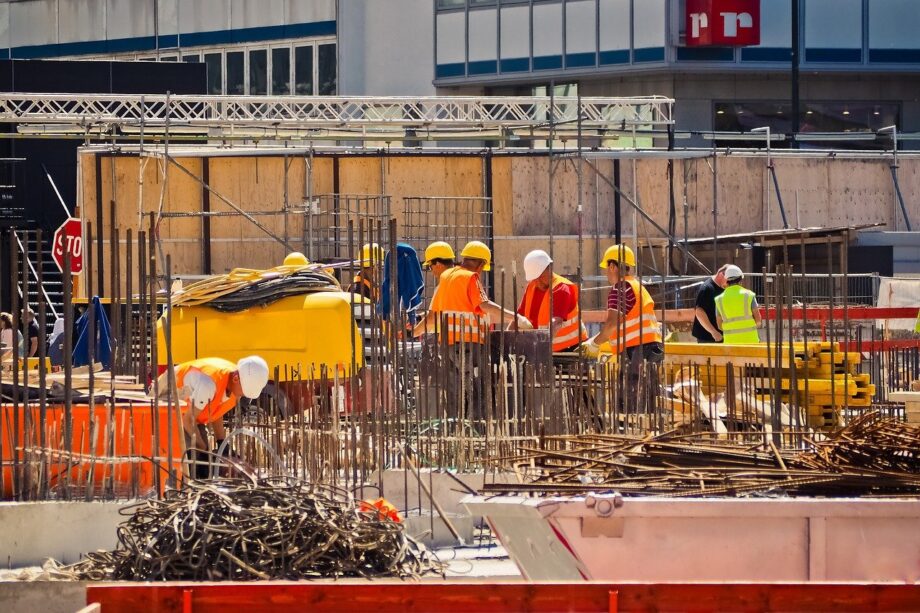
Calls for Construction Worker Temporary Visa scheme to help deliver the homes Londoners need

The Mayor of London, Sadiq Khan has today called on Government to create a temporary visa scheme for construction workers to alleviate the debilitating double impact of Brexit and the pandemic on the building industry.

In September 2021 the UK-wide vacancy rate in construction rose to its highest recorded level since 2001 (1) and vacancies in construction were 40 per cent higher in summer 2021 than in the three months before the pandemic (2). Last year the Government instigated a temporary visa concession for EU lorry drivers and poultry workers to come to the UK.

The Mayor is proposing that ministers create a Coronavirus Recovery Visa to help sectors that are struggling with shortages of workers, including construction. The visa should offer at least 12 months to work in the UK and be appropriately tailored to sectors like construction where many workers prefer to work on a self-employed basis.

Some of the labour shortages in this sector could have already been addressed had the Government implemented the recommendations from the Migration Advisory Committee’s October 2020 review to add ‘Bricklayers and masons’ and ‘Electricians and electrical fitters’ to the Shortage Occupation List. The Mayor is also calling for a regional shortage occupation list that allows London and other cities to attract and retain staff in sectors with acute labour shortages.

Prior to Brexit, the capital was dependent on migrant building workers with more than half the workforce being from the EU and beyond. ONS figures show that the number of construction workers in London from the EU fell 54 per cent between April 2017 and April 2020. Furthermore, the UK-born construction workforce is ageing, with an estimated 10-20 per cent reaching retirement age in the next five years.

The Mayor has hit his affordable housing target every year since taking office; 13,318 genuinely affordable homes were started in London last year alone, and in 2019/20 record numbers were started. The capital is also undergoing a council housing renaissance with boroughs starting more homes last year than at any time since the 1970s. However, this progress could be put at risk if construction sector employers cannot access a site-ready workforce to help build the homes Londoners need. 

Whilst a temporary visa scheme would provide a short-term fix, the Mayor is determined that young Londoners see the building industry as a positive and viable career, allowing them to benefit from the wide range of opportunities available in the sector whilst building the homes and infrastructure London desperately needs. This was the impetus for the Mayor to set up his Mayor’s Construction Academy (MCA) in 2018, connecting Londoners to training in the skills they need to access vacancies in the capital’s developments, in trades, professions and management. Since the MCA programme’s launch, more than 24,500 Londoners have completed construction training.

The Mayor is also aware of the need for best practice in the construction industry and is a signatory to Unite the Union’s Construction Charter which sets out to improve the city’s construction standards protect workers and outlaw poor construction practices. The charter ensures building contractors and sub-contractors under the control of local authorities provide apprentice training, a safe working environment, and the industry rate of pay to workers.

City Hall’s official assessment of housing need in London found that the city now requires around 66,000 new homes a year to provide enough homes for current and future Londoners.