


Swifties boost August public transport ridership as visitors from around the world flock to London
- London welcomed visitors from around the world as Wembley Stadium hosted five more performances of Taylor Swift’s record-breaking The Eras Tour, following three dates in June
- Nearly 700,000 people attended the eight gigs this summer – with more performances in London than anywhere else in the world
- Gigs and concerts with global music superstars boost public transport usage, with Taylor Swift’s shows in June taking Wembley Park Tube station past 150,000 entries and exits in a day for the first time since the pandemic
Transport for London (TfL) welcomed visitors from around the world this August, as people flocked to public transport for unmissable events in the capital, including Taylor Swift’s final five nights at Wembley Stadium.
There were more than 441,000 recorded entries and exits at Wembley Park Tube station across Thursday 15 August, Friday 16 August and Saturday 17 August, as fans travelled from around the world to see the latest performances in Taylor Swift’s The Eras Tour at Wembley Stadium. There were 146,293 on Thursday 15 August, 153,727 on Friday 16
August, and 141,552 on Saturday 17 August, with hundreds of thousands more expected to have passed through the station for the final two nights on Monday 19 August and Tuesday 20 August.
During the first three dates of her tour in June, Wembley Park Tube station broke more than 150,000 entries and exits in a day for the first time since 2019, with 167,237 entries and exits on the Friday 21 June and 153,761 on Saturday 22 June. On Sunday 23 June there were 137,059.
Taylor Swift’s record-breaking The Eras Tour is estimated to have boosted the capital’s economy by £300m. Ahead of her first performance in London, TfL launched a Swift-themed Tube map with lines representing albums and songs for stations. London (Taylor’s version) has been on display at Wembley Park Tube station to create photo
opportunities for fans who attended the concerts and will remain in place for the next few weeks.
This follows the unveiling of two public artworks at Wembley Park Tube station, including a giant mural on the Spanish Steps, which are being temporarily renamed the ‘Swiftie Steps’.
London has had a fantastic summer of international and homegrown music performing, including Green Day and Bruce Springsteen at Wembley Stadium, Burna Boy at the London Stadium, Nicki Minaj, 21 Savage, J Hus and Doja Cat at Wireless Festival in Finsbury Park, Kylie, SZA and Stray Kids at BST Hyde Park.
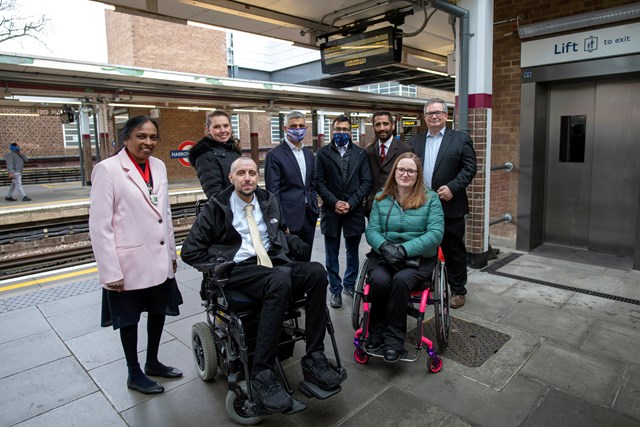
TfL confirms the next 12 Tube stations to be prioritised for step-free access, as work on improving accessibility of Underground network gathers pace. Neasden and Alperton station schemes progress to next stages.
- Design work to start on making Alperton, Arnos Grove and Eastcote Underground stations step-free, building on feasibility work that started last year
- These stations join North Acton and West Hampstead, announced earlier this year
- An additional seven Tube stations will be assessed for step-free access feasibility, including Neasden
TfL is starting design work imminently on making a further three Tube stations step free, which means there are now five Underground stations with funding in place for this phase. A further seven Tube stations will undergo assessment for step-free access feasibility.
Work is starting on the designs that would make three Piccadilly line stations step-free (Alperton, Arnos Grove and Eastcote, which is also served by the Metropolitan line), building on feasibility work that started last year.
This follows TfL confirming earlier this year that work was to start at Northolt Tube station on the Central line to make it step-free, and that design work will start at North Acton (Central line) and West Hampstead (Jubilee line).
A further seven Tube stations will also undergo assessment for step-free access feasibility; they are Croxley (Metropolitan line), East Finchley (Northern line), Neasden (Jubilee line), Northwood (Metropolitan line) and Turnham Green (District / Piccadilly lines), as well as Colliers Wood and Tooting Broadway on the Northern line.
Today, more than a third of Underground stations across the city provide step-free access, with the Mayor of London’s ambitious goal set at making 50 per cent of Tube stations step-free by 2030. Increasing the number of Underground stations with step free access continues TfL’s work to make the capital’s transport network more
accessible but progress will depend on deliverability and TfL’s future funding position, with schemes prioritised where there is third party funding available.

£3.1 million provided by the Mayor to transform Neasden Town Centre
I fully welcome the announcement from Mayor Khan that a £3.1 million investment for green spaces, road safety and a revitalised high street in Neasden Town Centre has been approved by City Hall.
The Neasden Town Centre project will transform one of London’s most polluted town centres into a greener, safer, and more accessible area for residents and visitors. It will invest in parks and green spaces, realign the road junctions to make it safer, make the town centre more accessible for pedestrians and refresh the high street to include a community training kitchen – engaging with young people and the local community.
Neasden Town Centre is one of five areas across Brent, Redbridge, Hackney, Lewisham, and Croydon receiving funding. Town centres totalling the size of four Wembley football pitches will be made greener, safer and more accessible over the next three years.
The funding is part of the Mayor of London’s, Sadiq Khan’s, £12.4 million Civic Partnership Programme, which will build a fairer city, making all areas of London enjoyable to spend time in. The funding will help create open, connected, and inclusive public spaces and high streets, allowing Londoners from all backgrounds to shape their city’s growth.
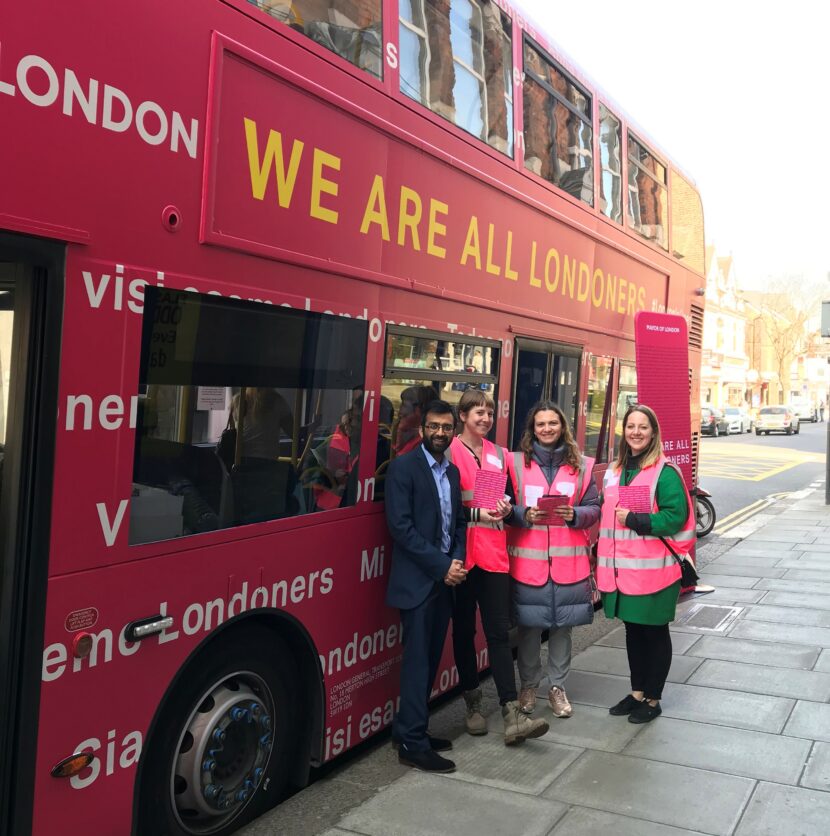
Mayor reiterates that London is for everyone as he provides extra support for security training at mosques following recent violence and disorder across the country
The Mayor of London, Sadiq Khan, has reiterated that London stands united against racism, Islamophobia and antisemitism as he announced additional support for security training at mosques in the capital, following the scenes of violence and disorder across the country earlier this month.
The targeting of Muslims and minority ethnic communities has left many fearing for their safety and the Mayor has worked closely with the Met, partners and communities across the capital to ensure those in London are safe – and feel safe.
The Mayor has provided funding for four additional security training sessions in mosques across the capital, as he extends his work to support faith leaders across the capital, build community cohesion and tackle hate crime following the recent disorder.
Sadiq has also welcomed the reopening of the Government’s Mosque Security Scheme following his calls. The scheme is providing rapid security support for any buildings vulnerable to Hate Crime, boosting the work done by local police forces and building on the Government’s existing Protective Security for Mosques Scheme, with up to £29.4 million already to fund security at mosques and Muslim faith schools.
Faith Associates, who are leading experts in Mosque security, led the first of the four new sessions at Al Manaar to provide practical advice on how to keep congregations and premises safe. Representatives from the Met were also in attendance. The sessions will cover protective security and safety processes, as well as hate crime and online
safety and security. A Community Resilience Champions programme also runs in partnership with London Boroughs Faiths Network that provides practical support for faith leaders on how to keep their places of worship safe for staff, visitors and communities.
As disorder took place in some cities, the Mayor chaired a meeting with the Met Commissioner, London MPs and borough leaders on community cohesion and safety in the capital. He also visited Chelsea FC Foundation who deliver sessions and online workshops funded by City Hall that empower young Londoners to reject hate and give them the confidence to stand up to intolerance.
This followed the Met Police and London Resilience Unit bringing together partners across the capital to ensure they were working together at a time of heightened tensions, and the Met making it clear that anyone seeking to engage in disorder and sow division would face the full force of the law.
Throughout his time as Mayor, Sadiq has led from the front to ensure the Met takes a zero-tolerance approach to all hate crime. This Mayor has invested a record £14.8m in combatting hatred, intolerance and extremism in all its forms, providing support to grassroots community groups, This includes his £3.95m Shared Endeavour Fund which
is helping tens of thousands of Londoners to get involved in grassroots community-led projects across London that stand up to hate, intolerance, extremism and radicalisation wherever they are, as well as supporting the Community Alliance To Combat Hate (CATCH) partnership which supports victims of all forms of hate crime.
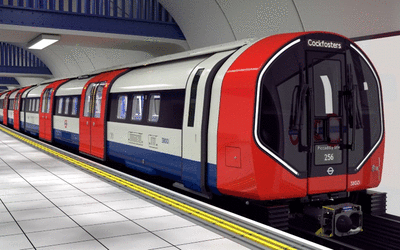


New data shows Mayor’s ULEZ expansion is working better than expected, bringing cleaner air to five million more Londoners
- Data shows ULEZ expansion is working better than predicted, with London’s air quality continuing to improve at a faster rate than the rest of England and pollutant emissions in 2023 reducing dramatically, compared to a scenario without the London-wide expansion.
- PM2.5 exhaust emissions from cars in outer London are estimated to be 22 per cent lower than without the expansion.
- Within the outer London ULEZ area, NOx emissions from cars and vans are estimated to be 13 and seven per cent lower than a scenario without the expansion. This is equivalent to removing 200,000 cars from the road for one year.
- Overall, NO2 concentrations in outer London are estimated to be 21 per cent lower than without the ULEZ and its expansions.
- 96 per cent of vehicles seen driving in London as a whole are now compliant, with a 53 per cent reduction in non-compliant vehicles in only six months.
New data from City Hall has revealed the expansion of the Ultra Low Emission Zone (ULEZ) across the whole capital last August is working – driving down emissions and bringing cleaner air to millions more Londoners.
In London, around 4,000 premature deaths are attributed to toxic air each year as well as increased risks of asthma and cancer and emerging evidence of links between air pollution and dementia.
The ULEZ is the centrepiece of a range of measures the Mayor is implementing to tackle London’s toxic air, including putting a record number of zero-emission buses on the roads. These additional measures are making a difference, but all the evidence shows that clean air zones like the ULEZ are the most effective tool available to quickly and meaningfully cut air pollution in big cities.
Today’s report, which covers the first six months of the expansion across all London boroughs, shows that pollutant emissions in 2023 with the London-wide ULEZ expansion in place are dramatically lower, compared to a scenario without it:
- Within the outer London ULEZ area, NOx emissions from cars and vans are estimated to be 13 per cent and seven per cent lower than a scenario without the expansion. This is equivalent to removing 200,000 cars from the road for one year.
- PM2.5 exhaust emissions from cars in outer London are estimated to be 22 per cent lower than without the expansion (six per cent more than expected).
- Across all measures, these impacts are aligned with, and in many cases greater than, what TfL estimated in the consultation for the outer London expansion.
NOX emissions savings in outer London now represent over 90 per cent of the total emission reductions seen in London as a result of the London-wide expansion.
The report also shows that, compared to what roadside NO2 concentrations are estimated to have been in different parts of London without the ULEZ and its expansions:
- Levels in Outer London are estimated to be 21 per cent lower
- Levels in Central London are estimated to be 53 per cent lower
- Levels in Inner London are estimated to be 24 per cent lower
The report shows that London’s air quality at the roadside is continuing to improve at a faster rate than the average for the rest of England. In 2014, the gap in nitrogen dioxide (NO2) levels between London and the rest of England was 20 µg/m3, whereas now it is less than 5 µg/m3. The expansion brought five million more Londoners into the ULEZ, and today’s report shows that outer London – which has historically had worse air quality than the rest of England average – now has levels of pollution much closer to levels in the rest of the country.
Even in the short six-month timeframe covered by the report, roadside NO2 concentrations in outer London have dropped by up to 4.4 per cent compared to what would have been expected without the London-wide expansion of the scheme. Given the size of outer London, every percent makes a huge difference.
Compliance levels have also increased further than expected, with 96.2 per cent of all vehicles subject to the ULEZ recorded driving in London now compliant, up from 90.9 per cent in June 2023. This has been aided by the Mayor’s £210m scrappage scheme, launched in January 2023 to support Londoners to switch to cleaner vehicles, with 53,351 applications approved so far and over 300 donated to humanitarian and medical efforts in Ukraine.
There are now fewer older, more polluting vehicles driving in London, with 90,000 fewer non-compliant vehicles detected on an average day in February 2024 compared to June 2023, representing a 53 per cent reduction in non-compliant vehicles in the first six months of operation.
Today’s preliminary data reveals significant progress, with a further report expected in early 2025 which will examine the first full year of the London-wide ULEZ expansion. The one-year report will be supported by an independent advisory group of experts and provide an even more comprehensive analysis of the air quality and traffic impacts of the scheme.
TfL makes £80 million of funding available to boroughs to help make streets safer and improve bus journey times
- Funding includes up to £50 million available over the next three years for boroughs to deliver significant safety improvements to their local area
- £30m also available to deliver transformational bus infrastructure and operational improvements in three successful boroughs
- London’s 33 boroughs are responsible for around 95 per cent of streets across the capital and are vital partners in making them safe, accessible and reliable for all
Transport for London is making up to £50 million of funding available for boroughs to improve road safety on borough roads, as well as £30 million of funding to improve bus journey times and increase bus ridership. London’s boroughs play a key role in the planning and delivery of schemes that transform local areas and support the Mayor’s Vision Zero goal of eliminating death and serious injury from the transport network, as well as improving opportunities for safe and active travel in local communities. They also help ensure that the capital’s bus service is comfortable and easy for all to use, offers attractive journey times and provides the connections people need.
This funding is in addition to the £80.4 million of Local Implementation Plan funding allocated to London’s boroughs in 2024/25 and will help boroughs to continue their vital work making the capital’s roads safer and more attractive for people using public transport, walking and cycling.
TfL is providing a fund of £50 million available to boroughs over the next three years to deliver significant safety improvements in their local area by reducing speeds and tackling the city’s most dangerous roads and junctions. The fund will be open to projects between £0.5 million and £5 million. Examples of schemes TfL will consider funding through Borough Safer Streets include:
- Projects that look to improve safety by reducing speeding and help to reduce the risk and severity of collisions
- Projects that develop improvements to protect vulnerable road users and improve safety for people walking and cycling
- Road safety improvements in high-risk locations
TfL is also providing £30 million in funding to a new programme called Better Bus Partnerships, which will make up to £10 million available for three successful boroughs to deliver transformational bus infrastructure and operational improvements. This includes new bus priority measures to improve journey times, better management of road works to reduce delays to buses, improvements to stops and stations to make it easier to change between buses and other modes of transport, and improvements to streets to make it easier to walk to bus stops and stations.
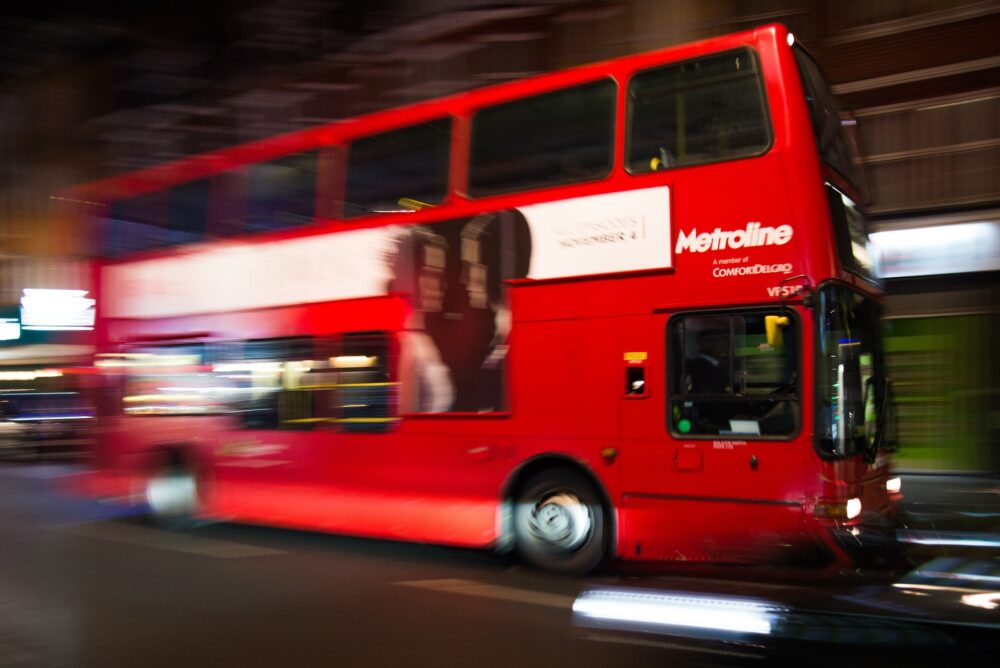
More than a billion Hopper journeys made on TfL
More than a billion Hopper journeys have made on a bus or tram since the scheme was introduced in September 2016.
Figures show how effective Hopper fares have been since their introduction, reaching a total 1,005,000 hopper fare journeys.
Elly Baker, London Assembly Labour spokesperson for transport, has said the figures demonstrate the success of the scheme, saving Londoners £1.75 each time they do not have to pay a second bus fare.
In the last year, Londoners’ savings equate to more than £300 million over 176 million journeys.
Hopper fares allow passengers unlimited free transfers between buses and trams if they touch on within an hour. The scheme was introduced by London Mayor Sadiq Khan so those who change buses to get to their destination are not charged more than those with a direct route.
Transport for London has maintained over 100 million journeys a year every full year since its introduction except for 20/21, when it fell to 80 million journeys due to the pandemic.
As well as the Hopper fare, the Mayor of London has frozen fares on TfL to save Londoners money and has piloted “off-peak Fridays”, in which all journeys on a Friday are charged at an off-peak rate.